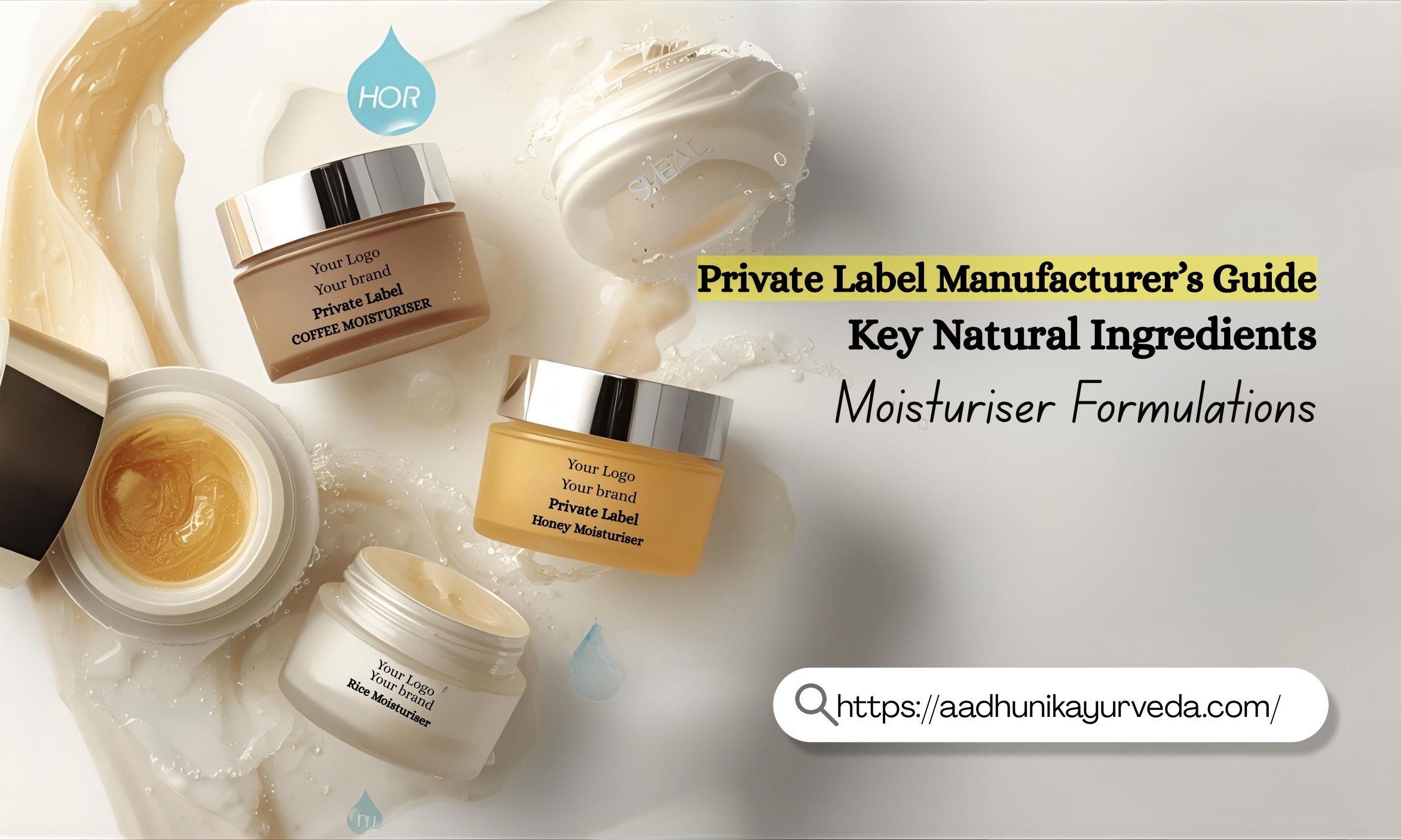
Private Label Manufacturer’s Guide: Key Natural Ingredients in Moisturiser Formulations
Why Ingredient Selection is Critical in Private Label Moisturisers | Core Natural Ingredients Used in Moisturisers | Trending Ingredients in Moisturiser Formulations | Vitamin C (Sodium Ascorbyl Phosphate) | Manufacturer’s Insight: How We Help Brands Formulate Moisturisers | | ConclusionMoisturisers are not just about hydration anymore—they are about experience, performance, and skin health. Today’s conscious customers don’t just want a cream that “feels good”; they want one that is clean, plant-based, chemical-free, sustainable, and effective. This shift in skincare demand has given private label manufacturers like us an important role: helping brands select the right blend of natural ingredients that not only work but also match their brand story.
From soothing botanicals like aloe vera to deeply nourishing shea butter, and from plant-derived hyaluronic acid alternatives to protective green tea extract, each ingredient in a moisturiser plays a unique role. As a private label skincare manufacturer, we guide businesses in choosing the right ingredients for their target audience while ensuring the products remain globally compliant, effective, and marketable.
Why Ingredient Selection is Critical in Private Label Moisturisers
- Consumer Trust & Transparency – Today’s buyers read ingredient labels carefully. Clean, natural, and easy-to-understand ingredients build brand trust.
- Functionality & Performance – Each ingredient should serve a skin benefit—hydration, repair, barrier protection, anti-aging, or soothing.
- Market Trends – Consumers demand trending actives like plant-based hyaluronic acid, probiotics, and ceramides; ignoring them can make a product outdated.
- Sustainability – Brands increasingly ask for eco-friendly and responsibly sourced raw materials.
- Regulatory Compliance – The ingredients must meet standards like FDA (US), BIS (India), EU Cosmetic Regulation, etc.
As a private label manufacturer, we help brands strike the balance between efficacy, clean formulations, and consumer appeal.
Core Natural Ingredients Used in Moisturisers
1. Organic Aloe Vera (Aloe Barbadensis Leaf Juice)
- Benefits: Hydrates deeply without greasiness, calms redness, soothes irritation, and supports skin repair.
- Why Brands Use It: Lightweight yet powerful—ideal for sensitive, acne-prone, and dry skin lines.
- Manufacturer POV: Works well in gels, creams, and lotions as a primary hydrating agent. It also enhances the natural claim of a formulation.
2. Plant-Based Hyaluronic Acid (Cassia Angustifolia Seed Polysaccharide)
- Benefits: Mimics skin’s natural hyaluronic acid, provides long-lasting hydration, plumps fine lines, and strengthens the skin barrier.
- Why Brands Use It: Strong demand for “plant-based hyaluronic acid” as a clean beauty trend.
- Manufacturer POV: Offers a marketing advantage—brands can highlight “100% natural hyaluronic alternative” on labels.
3. Vitamin E (Tocopherol from Plant Oils)
- Benefits: Antioxidant-rich, protects against environmental stress, prevents premature aging, and improves skin texture.
- Why Brands Use It: Customers recognize Vitamin E as a trusted skincare ingredient.
- Manufacturer POV: Enhances shelf stability of natural formulations as it also acts as a mild preservative.
4. Glycolic Acid (from Sugarcane Extract)
- Benefits: Gentle exfoliation, helps in cell turnover, brightens dull skin, and improves absorption of other ingredients.
- Why Brands Use It: Natural exfoliation is trending—people want glow without harsh chemicals.
- Manufacturer POV: Can be used in low percentages for moisturisers to make them “brightening” or “renewal” creams.
5. Organic Jojoba Oil (Simmondsia Chinensis Seed Oil)
- Benefits: Balances oil production, prevents clogged pores, and hydrates deeply.
- Why Brands Use It: Works for all skin types—oily, dry, combination.
- Manufacturer POV: Perfect as a carrier oil in moisturiser bases; versatile in both creams and serums.
6. Green Tea Extract (Camellia Sinensis Leaf)
- Benefits: Fights free radicals, reduces signs of aging, calms inflammation, and protects against UV damage.
- Why Brands Use It: “Green tea” as a label ingredient boosts consumer trust and brand positioning in the wellness space.
- Manufacturer POV: A cost-effective, high-impact addition that adds value to both luxury and affordable product lines.
7. Panthenol (Vitamin B5 from Plant Sources)
- Benefits: Deep hydration, strengthens skin barrier, repairs dryness, and adds a smooth, soft finish.
- Why Brands Use It: Known as a healing vitamin—adds credibility to claims like “skin-repairing” or “soothing moisturiser.”
- Manufacturer POV: Compatible with almost all natural ingredients, making it a safe addition in clean beauty formulations.
8. Shea Butter (Butyrospermum Parkii)
- Benefits: Rich in vitamins A & E, intensely moisturising, softens rough patches, reduces inflammation, and supports collagen production.
- Why Brands Use It: A premium, indulgent ingredient that resonates with customers seeking natural, rich moisturisers.
- Manufacturer POV: Works best in night creams, body butters, and products aimed at extremely dry skin.
Trending Ingredients in Moisturiser Formulations
- Bakuchiol (Plant-based Retinol Alternative) – Gentle anti-aging without irritation.
- Niacinamide (from Yeast Fermentation) – Brightening, barrier-supporting, pore-minimizing.
- Cica (Centella Asiatica) – Soothes sensitive and inflamed skin.
- Squalane (from Olive or Sugarcane) – Lightweight, non-comedogenic hydration.
- Oat Extract & Oat Lipids – Calming and barrier-repairing.
- Blueberry & Pomegranate Extracts – Antioxidant-rich superfoods for skincare.
Manufacturer’s Insight: How We Help Brands Formulate Moisturisers
- Ingredient Customization – We select plant-based, natural ingredients to suit your target audience (anti-aging, acne-prone, sensitive, luxury, affordable).
- Private Label Flexibility – From small-batch to bulk, we manufacture for startups and established brands.
- Compliance & Safety – Formulas meet international standards (FDA, EU, BIS).
- Sustainability Promise – We prioritize eco-friendly sourcing and biodegradable formulations.
- Marketing Edge – We help brands highlight trending natural actives in a way that resonates with customers.
Conclusion
Choosing the right ingredients for moisturisers is more than just a formulation step—it’s the foundation of a skincare brand’s success. With organic botanicals, plant-based actives, and trending natural extracts, private label moisturisers can stand out in today’s competitive market.
As a manufacturer, our role is to provide clean, effective, and consumer-driven formulations that not only work but also align with your brand’s promise of natural beauty.
FAQs:
Can toners and mists be made without synthetic acids?
Yes, by using natural fruit sources of Vitamin C and botanical salicin from willow bark, you can avoid lab-created acids completely.
Which ingredient is best for acne-control toners?
Tea tree oil, witch hazel, and willow bark extract are the most effective natural ingredients for acne-friendly mists.
Are plant-based Vitamin C sources stable in formulations?
Yes, when stabilized with supporting antioxidants like green tea or licorice, fruit-based Vitamin C remains effective.
Can private label manufacturers customize toner scents naturally?
Absolutely. Instead of synthetic fragrances, we use essential oils and hydrosols like rose, lavender, or cucumber.
What certifications can brands get for their natural toners & mists?
Brands can choose Organic, Vegan, Cruelty-Free, and Eco-Cert certifications to stand out in the natural skincare market.