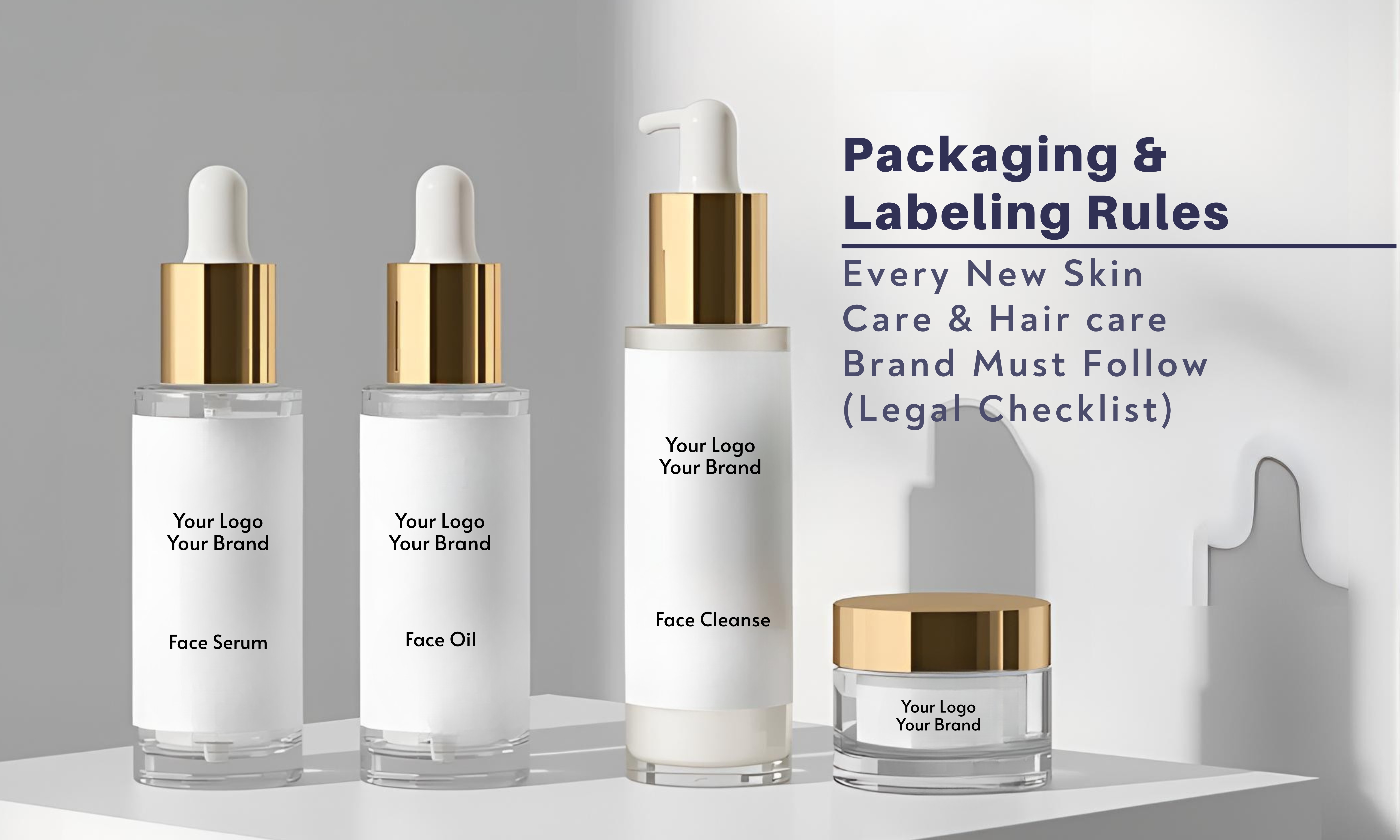
Packaging & Labeling Rules Every New Brand Must Follow (Legal Checklist)
Role of Packaging & Labeling in Product Legitimacy | Regulatory Foundations Every New Brand Must Understand | Mandatory Label Elements Required for Cosmetics & Skincare | MIS (Manufacturer Information System): Importance & Compliance Protocol | Batch Number & Traceability Standards | PAO (Period After Opening) & Shelf-Life RegulationsEvery time a new skincare or wellness brand approaches us with a product idea, their first excitement is usually about the formula, fragrance, texture, actives, performance. But as manufacturers, we know that a great product does not enter the market on formula alone. It enters the market through packaging that protects it, labeling that legally supports it, and branding that gives it identity.
The truth is simple: your packaging speaks before your product does. It tells your customer whether your brand is trustworthy, regulated, safe, and worth choosing. Unfortunately, this is where many new brands struggle, not because their products lack quality, but because they underestimate the legal and strategic importance of packaging and labeling.
As a manufacturer, our responsibility extends far beyond filling a container. We ensure complete regulatory alignment, from ingredient transparency to traceability, from allergen declarations to mandatory symbols such as PAO, and from correct MIS (Manufacturer Information System) data to the recommended ingredients order. Packaging is both a legal requirement and a brand strategy. It must protect the formulation, communicate trust, and comply with international norms simultaneously.
Role of Packaging & Labeling in Product Legitimacy
Packaging and labeling collectively determine whether a product can be accepted by the market, regulatory bodies, retailers, and e-commerce platforms. These two components form the legal identity of the product. Cosmetic Packaging Compliance, Skincare Labeling Guidelines
Why they matter:
- Packaging prevents contamination, maintains product stability, and supports long-term shelf life.
- Labeling communicates mandatory information such as allergens, manufacturing details, and instructions.
- It builds brand authority and professional credibility.
Key Points:
- Regulatory bodies evaluate labels before formulas, incorrect labeling results in immediate rejection.
- Packaging is the first consumer-touchpoint that reflects professionalism and reliability.
- Proper labeling reduces customer concerns and increases trust in new brands.
Today, retailers and marketplaces increasingly prefer products that follow cosmetic packaging regulations India, skincare packaging legal requirements, and cosmetic label compliance standards because these factors directly influence consumer trust and product acceptance.

Regulatory Foundations Every New Brand Must Understand
Every country follows standardized cosmetic legislation to ensure product safety. For India, rules fall under the Drugs and Cosmetics Act & Rules, while brands selling internationally must also consider EU, FDA, GCC, or ASEAN norms.
Manufacturers ensure that each product aligns with these requirements before mass production, but the final responsibility for artwork approval lies with the brand owner. Therefore, understanding regulatory foundations is essential.
Key Points:
- Regulations are non-negotiable, non-compliance can lead to product recalls or bans.
- Online platforms (Amazon, Flipkart, Nykaa) require strict compliance before approval.
- Brands must collaborate closely with manufacturers for artwork vetting.
Brands entering competitive markets must understand cosmetic product legal checklist, FDA cosmetic labeling requirements, EU cosmetic labeling compliance, and private label skincare packaging regulations to avoid legal complications during expansion.
Mandatory Label Elements Required for Cosmetics & Skincare
Every cosmetic product must display a standardized list of elements to ensure safety, transparency, and traceability. Cosmetic Labeling Requirements, Legal Packaging Checklist for Cosmetics
Mandatory Elements Include:
- Product identity (e.g., Face Serum, Hair Cleanser)
- Net quantity (mL/g)
- MIS (Manufacturer or Marketer details)
- Batch number
- Manufacturing date and expiry
- PAO (Period After Opening)
- Complete ingredient list in correct order
- Warnings and precautions
- Allergen disclosures
- Directions and storage instructions
Each of these must follow legal formatting standards, including font size, contrast, and placement.
Key Points:
- Missing any mandatory element can prevent retail approval.
- Labels must be permanent, visible, and legible under normal conditions.
- Claims such as 100% chemical-free or dermatologist-approved non-toxic must be supported by documentation.
Following cosmetic labeling requirements India and maintaining ingredient transparency in skincare products helps brands establish authenticity while improving marketplace approvals and consumer confidence.
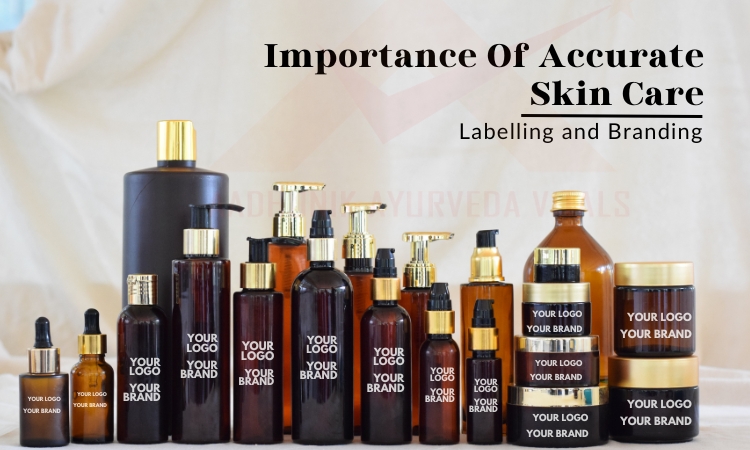
MIS (Manufacturer Information System): Importance & Compliance Protocol
MIS identifies the entity accountable for producing the product. This ensures transparency, authenticity, and compliance with government norms.
MIS Must Include:
- Manufacturer or packer name
- Complete address with PIN code
- Customer care contact details
A correct MIS ensures legal traceability and supports consumer protection.
Key Points:
- MIS must match official manufacturing licenses and cannot be altered creatively.
- MIS must be printed clearly—no abbreviations or incomplete addresses.
- Non-compliant MIS can result in penalties during audits.
Proper MIS compliance is an essential part of private label skincare manufacturer compliance because accurate manufacturer details ensure traceability, legal accountability, and smoother audit approvals.
Batch Number & Traceability Standards
The batch number is a product’s unique identity. It links every unit to its specific manufacturing batch, ensuring traceability at every stage. Cosmetic Batch Coding Standards
Importance of Batch Numbers:
- Enables recall management
- Allows investigation during customer complaints
- Ensures transparent production monitoring
Key Points:
- Batch numbers must be printed permanently—no fading inks.
- Different SKUs should never share batch numbers.
- Missing batch codes result in automatic rejection during inspection.
Strong traceability systems aligned with cosmetic batch coding standards also strengthen consumer trust and simplify complaint resolution processes.
PAO (Period After Opening) & Shelf-Life Regulations
PAO indicates how long a product remains safe after being opened. Shelf-life reflects the stability of the formula under normal storage conditions.
Why PAO Matters:
- Helps consumers understand product usability
- Aligns with international cosmetic norms
- Protects brands from safety-related complaints
Key Points:
- The PAO icon must be clearly visible (e.g., 6M, 12M, 24M).
- Natural formulas with no preservatives require stricter PAO communication.
- Shelf-life testing must precede label finalization.
Brands focusing on natural skincare manufacturing and preservative-light formulations must especially prioritize cosmetic shelf-life compliance and accurate PAO communication.
Ingredient Listing Norms (Descending Order & INCI Requirements)
Ingredients must be declared using INCI (International Nomenclature of Cosmetic Ingredients) to maintain global uniformity. INCI Ingredient List Rules, Cosmetic Ingredient Transparency
Ingredient Declaration Rules:
- Ingredients ≥1% must be listed in descending order of concentration.
- Ingredients < 1% may be listed in any sequence.
- Fragrances must be declared as Fragrance/Parfum.
Key Points:
- Vague terms such as "herbal blend" or "active complex" are not permitted without breakdown.
- INCI names improve product acceptance internationally.
- Incorrect ingredient order can legally invalidate the label.
Using standardized INCI ingredient list rules improves global product acceptance and supports clean beauty product transparency, especially for export-focused skincare brands.
Allergen Disclosure Obligations
Cosmetic allergens may come from essential oils, botanical extracts, fragrance components, or naturally occurring compounds.
Allergen Declaration Is Required For:
- Essential oils like lavender, tea tree, peppermint
- Botanical extracts such as chamomile or citrus
- Fragrance molecules such as limonene, linalool, citronellol
Key Points:
- Allergens above regulatory thresholds must be declared clearly.
- Allergen symbols or warnings improve brand credibility.
- Transparency helps avoid dermatological complications and complaints.
Transparent allergen declarations improve consumer skincare safety and reduce risks associated with sensitive skin reactions, especially in botanical-based formulations.
Designing Packaging That Communicates Brand Identity
Packaging is a strategic branding tool. It reflects the brand’s philosophy, pricing, and target market.Brand-Aligned Cosmetic Packaging
Brand Identity Factors:
- Colour palette reflecting the brand tone
- Typography and layout consistency
- Packaging shape aligned with product positioning
Key Points:
- Premium brands must opt for superior materials to justify price.
- Minimalist brands should avoid cluttered labels.
- Consistency across product ranges enhances recognition.
Material Selection: Compatibility, Safety & Stability
The selection of packaging material must be based on compatibility with the formulation, not aesthetics alone. Cosmetic Packaging Material Testing
Common Materials:
- Glass (serums, essential oils)
- PET/HDPE bottles (shampoos, lotions)
- Aluminium tubes (creams, ointments)
- PP jars (body butters)
Key Points:
- Oils react with certain plastics—compatibility testing is essential.
- UV-sensitive actives require amber or frosted packaging.
- High-viscosity formulas need airless pumps or wide-mouthed containers.
Modern skincare packaging material testing ensures formulations remain stable and protected from oxidation, leakage, and environmental exposure.
Sustainability Compliance & Eco-Friendly Packaging Trends
Modern brands increasingly prioritize environmentally responsible solutions.
Sustainable Options Include:
- Recyclable PET
- Glass packaging
- Minimalist cartons
- Metal containers
- Biodegradable labels
Key Points:
- Reduced packaging appeals to eco-conscious customers.
- Sustainability improves brand reputation and long-term value.
- Refill-friendly designs reduce carbon footprint.
Sustainable packaging is becoming a major factor in eco-friendly cosmetic packaging trends, helping brands improve both environmental positioning and consumer perception.
Common Packaging and Labeling Errors Made by New Brands
Most emerging brands overlook compliance due to lack of industry knowledge.
Typical Mistakes:
- Incorrect ingredient sequencing
- Missing allergen declarations
- Over-creative fonts reducing legibility
- Incomplete MIS data
- Claims without scientific backing
Key Points:
- Non-compliance leads to listing rejection by retailers & marketplaces.
- Labels must go through a manufacturer compliance check.
- Legal penalties apply for false claims or incorrect labeling.
Ignoring cosmetic legal compliance checklist often leads to rejected marketplace listings, delayed approvals, and avoidable financial losses for new skincare businesses.
Manufacturer’s Recommendations for Smooth Compliance
Manufacturers work closely with brands to ensure products meet regulatory standards.
Recommendations Include:
- Conducting stability and compatibility tests before packaging finalization
- Running multiple print samples to check label accuracy
- Keeping digital and hard-copy artwork archives for audits
Key Points:
- QR codes enhance traceability and authenticity.
- High-resolution printing prevents smudging and fading.
- Barcode integration helps with retail distribution.
Working with a trusted private label skincare manufacturer simplifies compliance management by ensuring packaging, labeling, and formulation standards align with legal expectations.
Conclusion
Packaging and labeling form the legal backbone of every cosmetic product. A formulation cannot reach consumers unless its packaging complies with regulatory norms and aligns with brand identity. For new brands, mastering this area is not optional—it is essential. When executed correctly, packaging builds consumer trust, simplifies distribution approvals, ensures legal safety, and positions the brand as a professional contender in the competitive beauty market.
FAQs:
Why is correct labeling mandatory for cosmetics?
Because it ensures consumer safety, regulatory compliance, and brand transparency.
What is the purpose of a batch number?
It helps trace production cycles, manage recalls, and maintain quality control.
What is PAO?
PAO (Period After Opening) indicates how long a product is safe to use after it is opened.
Why must ingredients follow a specific order?
Ingredients above 1% must be listed in descending order for legal and safety reasons.
Why is allergen disclosure important?
To protect customers with sensitivities and prevent adverse reactions.
How do I choose packaging that suits my brand?
Select materials, colours, and structures that represent your brand identity while ensuring compatibility with your formulation.
Do skincare products require legal packaging approval before launch?
Yes, skincare products must comply with cosmetic packaging compliance, ingredient disclosure, MIS requirements, batch coding, and labeling norms before entering retail or online marketplaces.
Can a manufacturer help with skincare packaging and labeling compliance?
Yes, a professional private label skincare manufacturer helps brands with skincare labeling guidelines, legal packaging requirements, ingredient declaration, PAO symbols, and regulatory-ready artwork support.